Stop training for Day One. Start preparing for Customer Conversation One.
The goal of onboarding should never be to complete training. The goal should be preparing a salesperson for their first real customer conversation. Those are two very different outcomes. Instead of asking 'Did they finish onboarding? Did they complete every course? Did they pass the certification?' — ask: Can they confidently lead a discovery call? Can they handle objections? Can they communicate business value? Can they earn the buyer's trust? Can they move an opportunity forward? That's what sales readiness looks like.
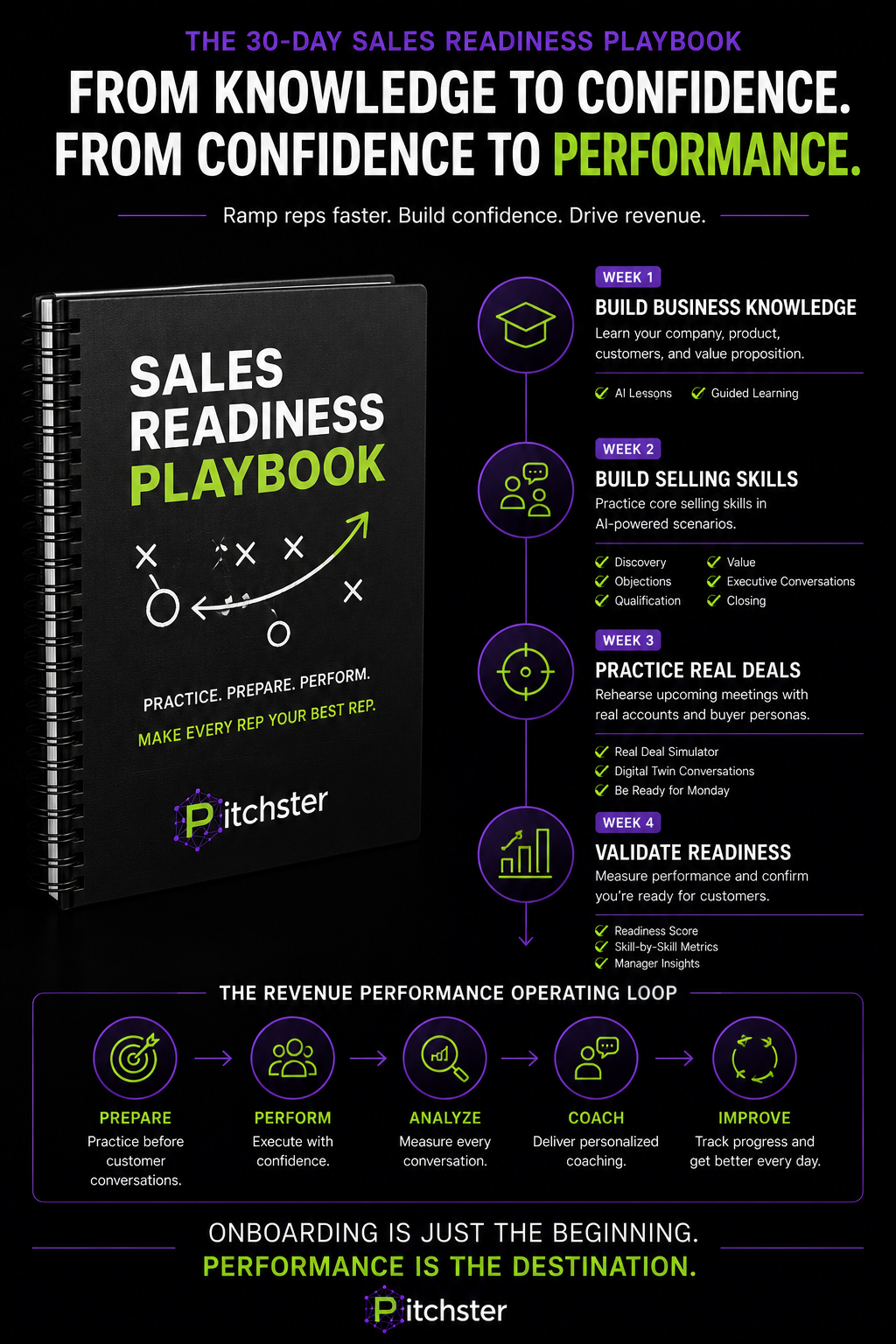
Week 1 — Build business knowledge
Every salesperson needs a strong foundation. During the first week, focus on understanding your customers, your industry, your Ideal Customer Profile, your products and services, your competitors, and your value proposition. Knowledge is essential — but this is only the beginning. Pitchster delivers structured learning experiences that introduce core concepts while preparing reps for the conversations they'll soon be having. Instead of memorizing information, reps begin thinking about how they'll communicate value to customers.
Week 2 — Turn knowledge into conversations
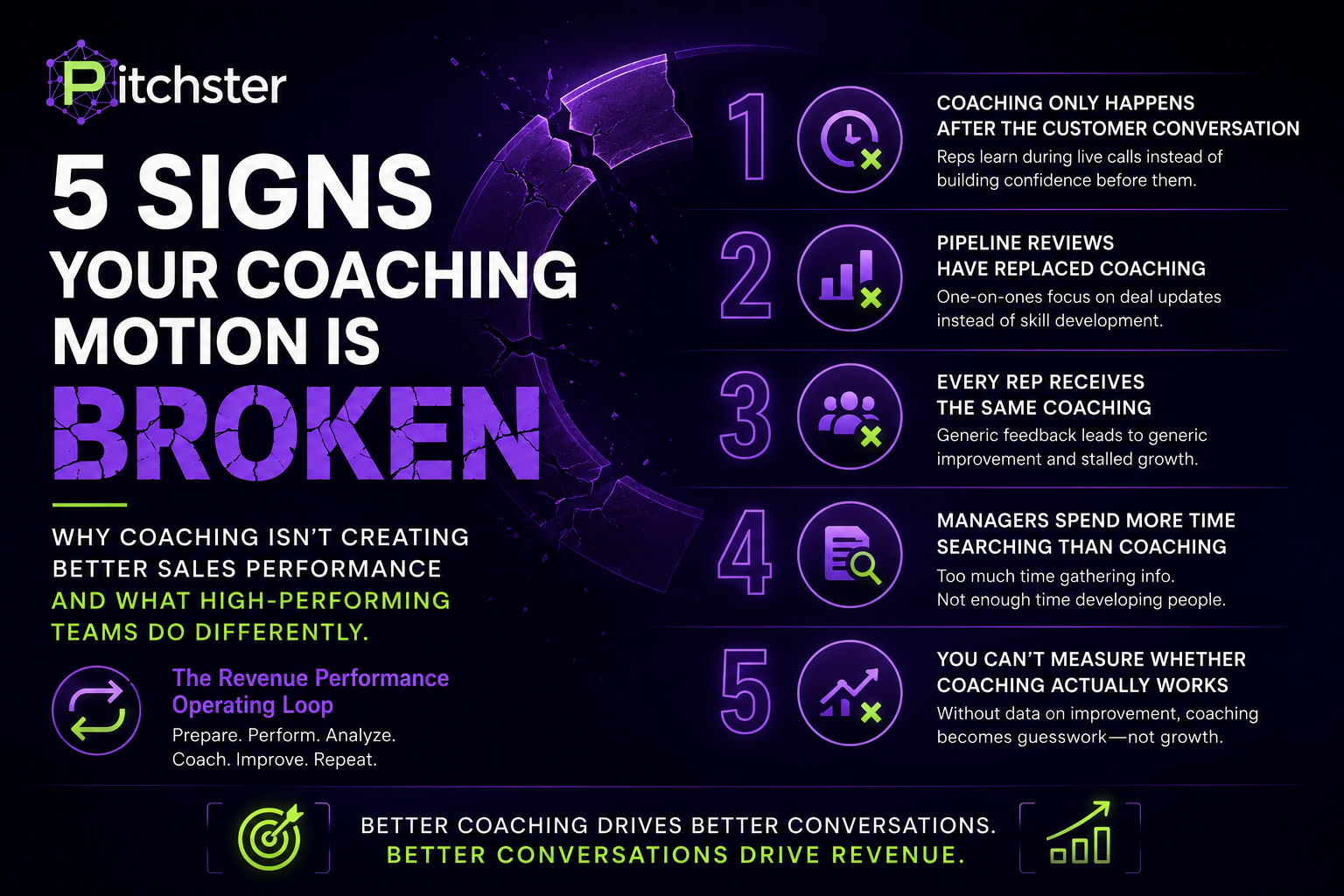
Knowledge doesn't create confidence. Practice does. This is where onboarding should shift from learning to doing. Instead of reading another document, new hires begin practicing real sales conversations: discovery, qualification, objection handling, business value conversations, executive communication, and closing techniques. Pitchster's Guided Practice Scenarios let reps rehearse core selling skills in a safe environment. Every conversation is evaluated. Every attempt receives immediate coaching. Every practice session builds confidence before customer meetings — so instead of hoping reps are ready, managers can watch them improve.
Week 3 — Rehearse real opportunities
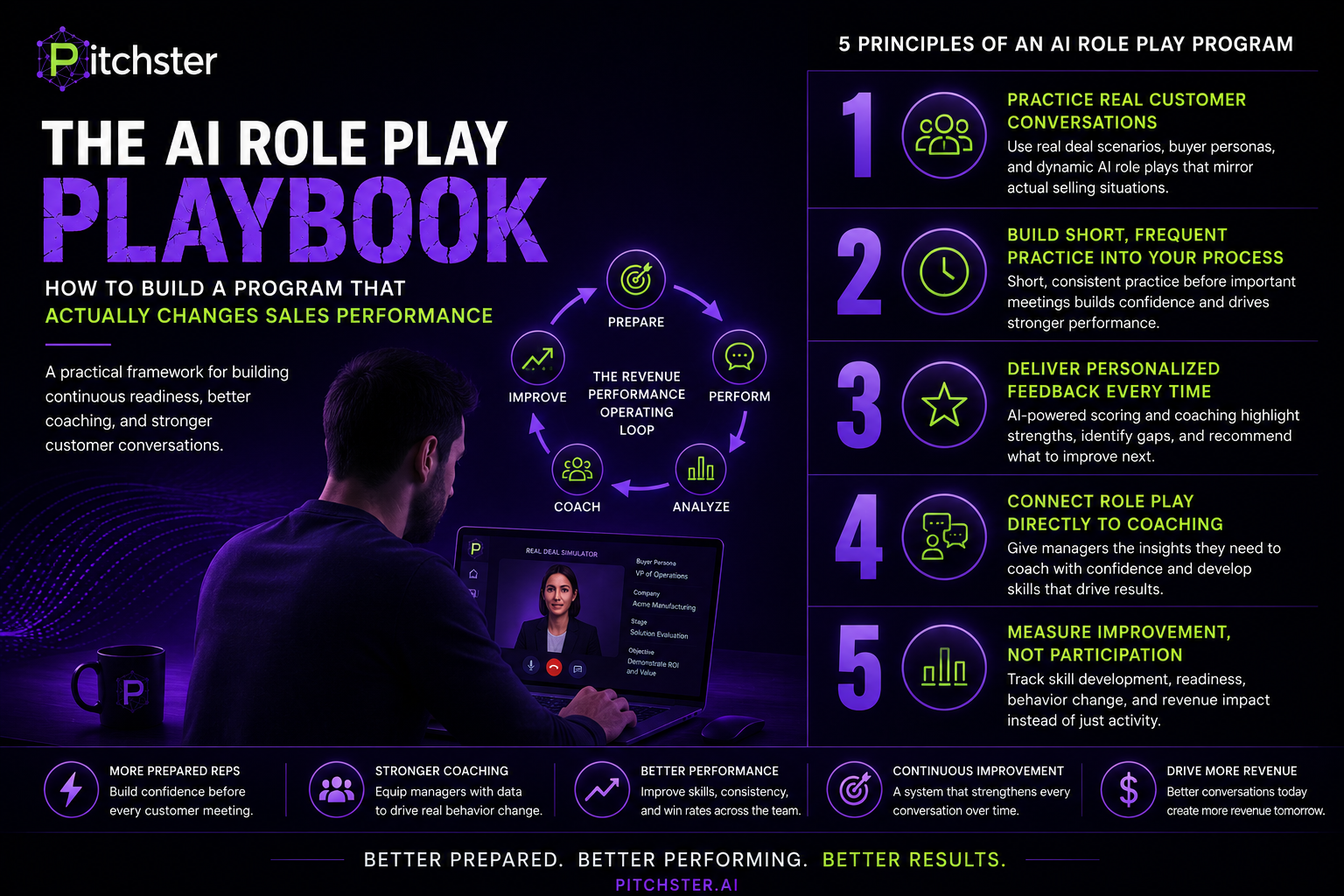
Most onboarding programs still rely on generic role plays, but real customers aren't generic. Every opportunity has different buyers, objections, priorities, competitors, and goals. Salespeople should practice the conversations they're actually going to have. Pitchster's Real Deal Simulator lets reps prepare for upcoming customer meetings using the actual company, buyer persona, sales stage, meeting objective, expected objections, and customer context. Instead of practicing imaginary conversations, reps prepare for Monday's meeting — that's when confidence grows.
Week 4 — Measure sales readiness
Many organizations end onboarding with a certification. Knowledge has been validated — but can the salesperson perform? That's the question that matters. Every Pitchster practice session generates a Revenue Performance Scorecard measuring readiness across key selling behaviors: overall readiness score, discovery effectiveness, communication, active listening, objection handling, value communication, executive presence, closing confidence, and next-step execution. Instead of saying 'They completed onboarding,' managers can confidently say, 'They're ready for customers.'
From onboarding to revenue performance
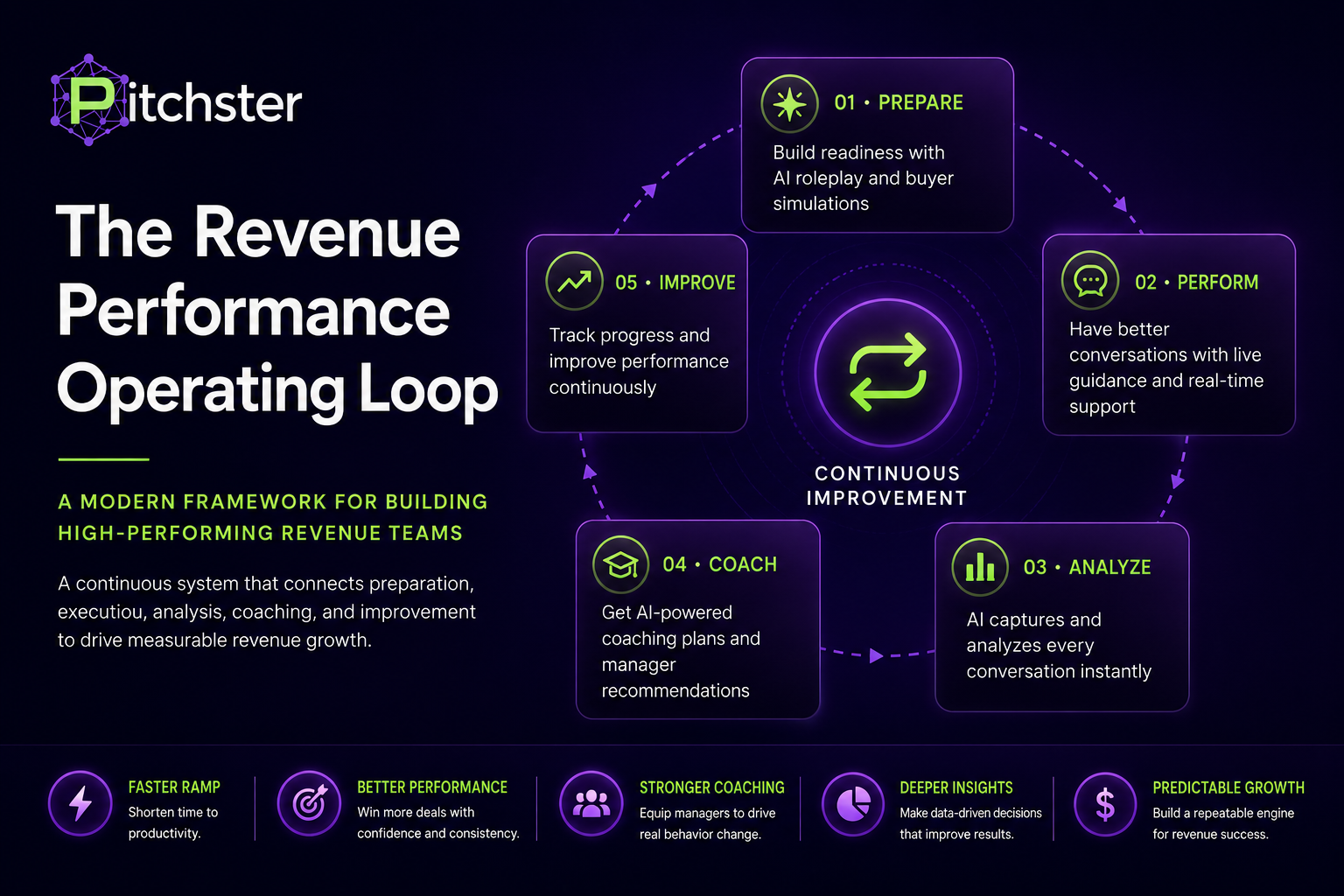
Here's where traditional onboarding ends: training completed, certification earned, first customer meeting. Pitchster doesn't stop there. The exact same platform that prepares new hires continues supporting them throughout their career — the onboarding experience naturally transitions into continuous revenue performance. No reset. No new system. No disconnected process. The same workflow that prepares a new hire becomes the operating system for every experienced seller: Prepare → Perform → Analyze → Coach → Improve. Repeat. That's how organizations build consistency across the entire sales team.
Knowledge doesn't drive revenue. Confidence does.
Salespeople don't become successful because they completed onboarding. They become successful because they feel prepared — prepared to ask better questions, handle objections, lead executive conversations, and create value. Confidence changes conversations. Conversations create revenue. That is why the goal should never be faster onboarding. The goal should be faster readiness. The fastest-ramping organizations don't simply train more — they prepare better: build knowledge, develop selling skills, practice real customer conversations, measure readiness, and continue coaching long after onboarding ends.