Executive summary
Most organizations don't struggle because they lack sales training. They struggle because their training doesn't create lasting behavior change. A new onboarding class finishes. A quarterly sales kickoff ends. Managers run a few role plays. Everyone goes back to work. Within weeks, many of the skills that were practiced begin to fade, and salespeople return to old habits. The problem isn't the quality of the training — it's the lack of a system. Role play is often treated as a one-time event instead of a continuous practice that prepares salespeople for every customer conversation. The highest-performing revenue organizations build structured role play programs that reinforce learning before customer meetings, provide objective feedback after every practice session, and continuously improve selling behaviors over time.
Why most AI role play programs fail
AI role play has become one of the fastest-growing categories in sales technology. Organizations invest in platforms hoping to improve confidence, shorten onboarding, and increase sales performance. Yet many programs lose momentum after the initial launch — participation declines, managers stop assigning practice, scenarios become repetitive, and salespeople stop seeing value. Eventually, role play becomes another unused tool. The technology isn't usually the problem; the program is. Successful organizations don't simply implement AI — they build a culture of continuous readiness. The better question isn't 'How do we get our team to use AI role play?' but 'How do we build a program that makes practice part of every important customer conversation?'
Principle 1 — Practice real customer conversations, not generic scripts
The fastest way to lose engagement is asking experienced salespeople to practice unrealistic conversations. If every scenario feels fictional, participation drops, confidence doesn't improve, and learning doesn't transfer into customer meetings. Instead, role play should mirror the conversations your team actually has every day — active opportunities, target buyer personas, industry-specific conversations, competitive situations, discovery calls, objection handling, executive presentations, and renewal/expansion conversations. Pitchster provides three ways to practice: Guided Practice Scenarios for core selling skills; the Real Deal Simulator for rehearsing an actual upcoming meeting using your opportunity, buyer persona, company, sales stage, and meeting objectives; and the Digital Twin Simulator for practicing against an AI-generated buyer that mirrors your target customer and adapts throughout the conversation.
Principle 2 — Build short, frequent practice into your sales process
Role play should never feel like another mandatory meeting. The best organizations don't create training events — they create habits. Rather than scheduling one large role play session every quarter, encourage smaller practice sessions throughout the sales cycle: before important discovery calls, executive presentations, product launches, competitive opportunities, renewal conversations, and new objection trends. Ten minutes of focused practice before a customer meeting creates significantly more value than several hours of role play months earlier. Consistency builds confidence. Confidence improves execution.
Principle 3 — Deliver personalized feedback every time
Generic coaching produces generic improvement. Every salesperson has different strengths, blind spots, and coaching priorities. The best AI role play programs evaluate specific selling behaviors: discovery effectiveness, active listening, objection handling, business value communication, executive presence, confidence, closing effectiveness, and conversation flow. After every simulation, the salesperson should immediately understand what they did well, what needs improvement, and what they should practice next. Every Pitchster simulation delivers an overall performance score, individual skill scores, personalized coaching recommendations, strengths, areas for improvement, and a suggested next practice session.
Principle 4 — Connect role play directly to coaching
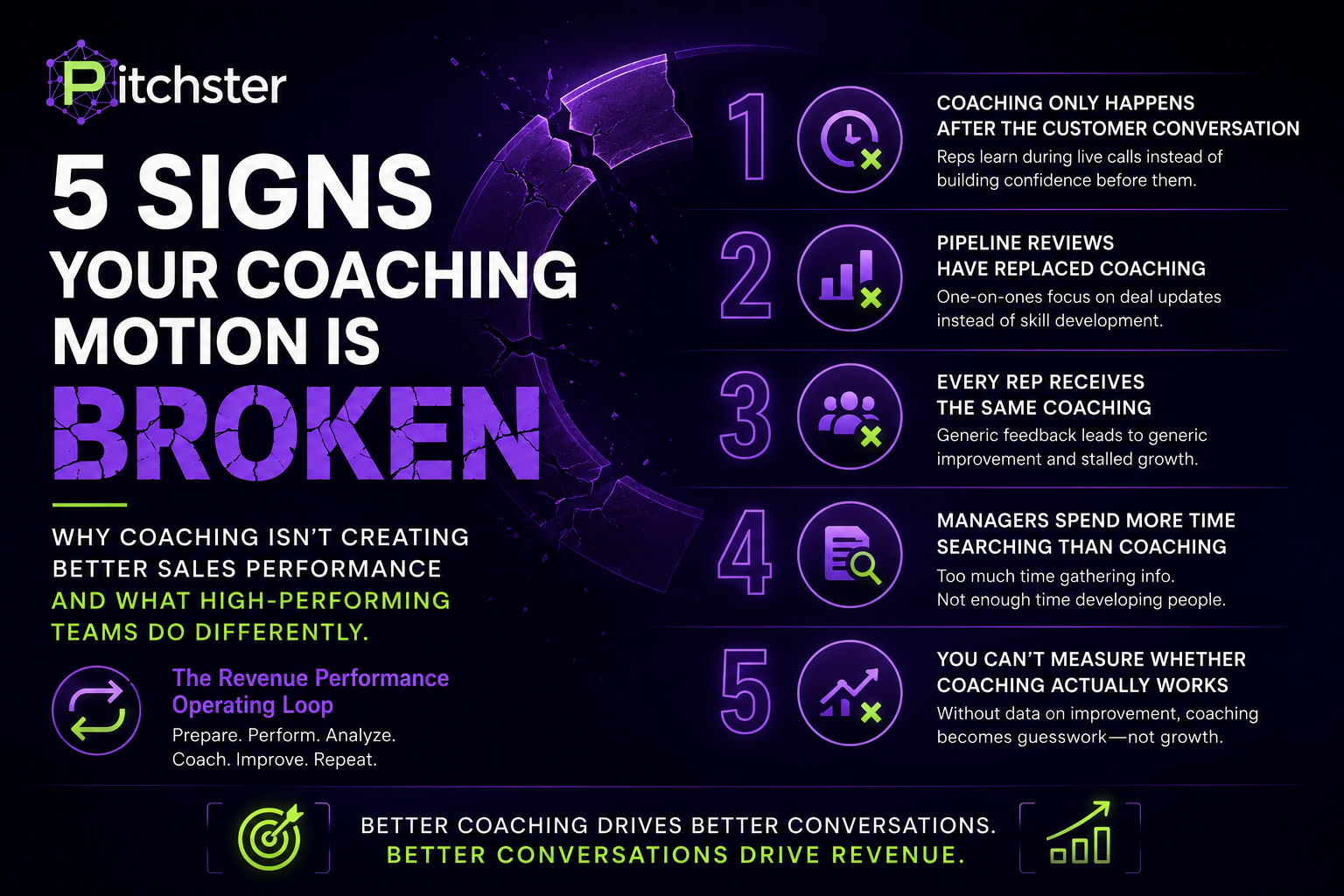
Practice without coaching becomes repetition. Coaching without practice becomes theory. High-performing organizations connect both. Managers shouldn't spend coaching sessions asking 'What should we coach today?' — the performance data should answer that question. Instead of reviewing conversations simply to understand what happened, managers use insights to improve what happens next. Coaching becomes objective, personalized, actionable, and consistent. Managers spend less time searching for coaching opportunities and more time developing their people.
Principle 5 — Measure improvement instead of participation
Many organizations celebrate the number of role plays completed, training attendance, and course completion rates. Those metrics measure activity — they do not measure performance. The better questions are: Are discovery conversations improving? Are objection handling scores increasing? Are salespeople becoming more confident? Are customer meetings improving? Are managers coaching more effectively? Is revenue performance improving? Participation tells you who showed up. Performance tells you whether your program is working. Measure readiness. Measure behavior change. Measure confidence. Measure revenue impact.
The Pitchster playbook
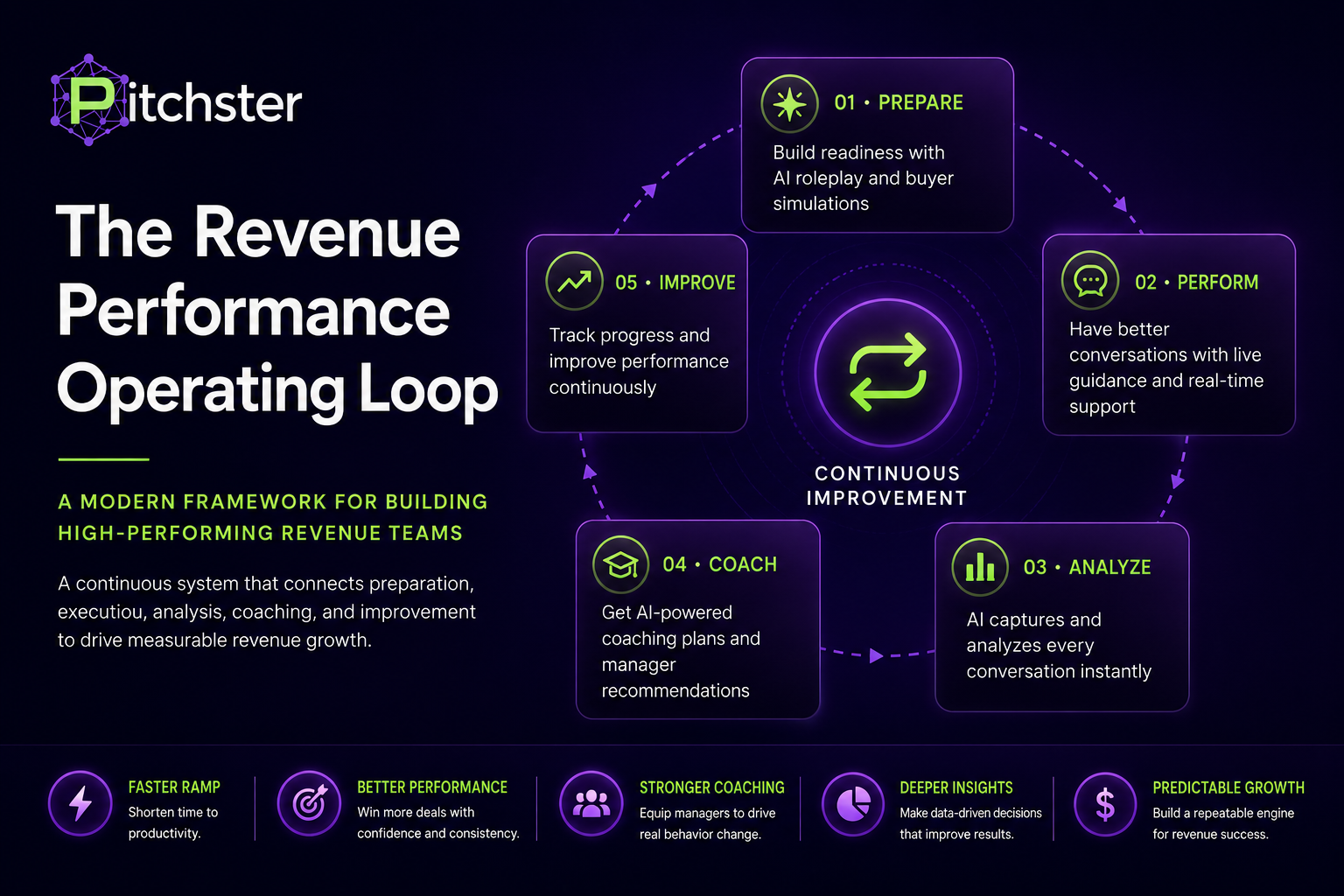
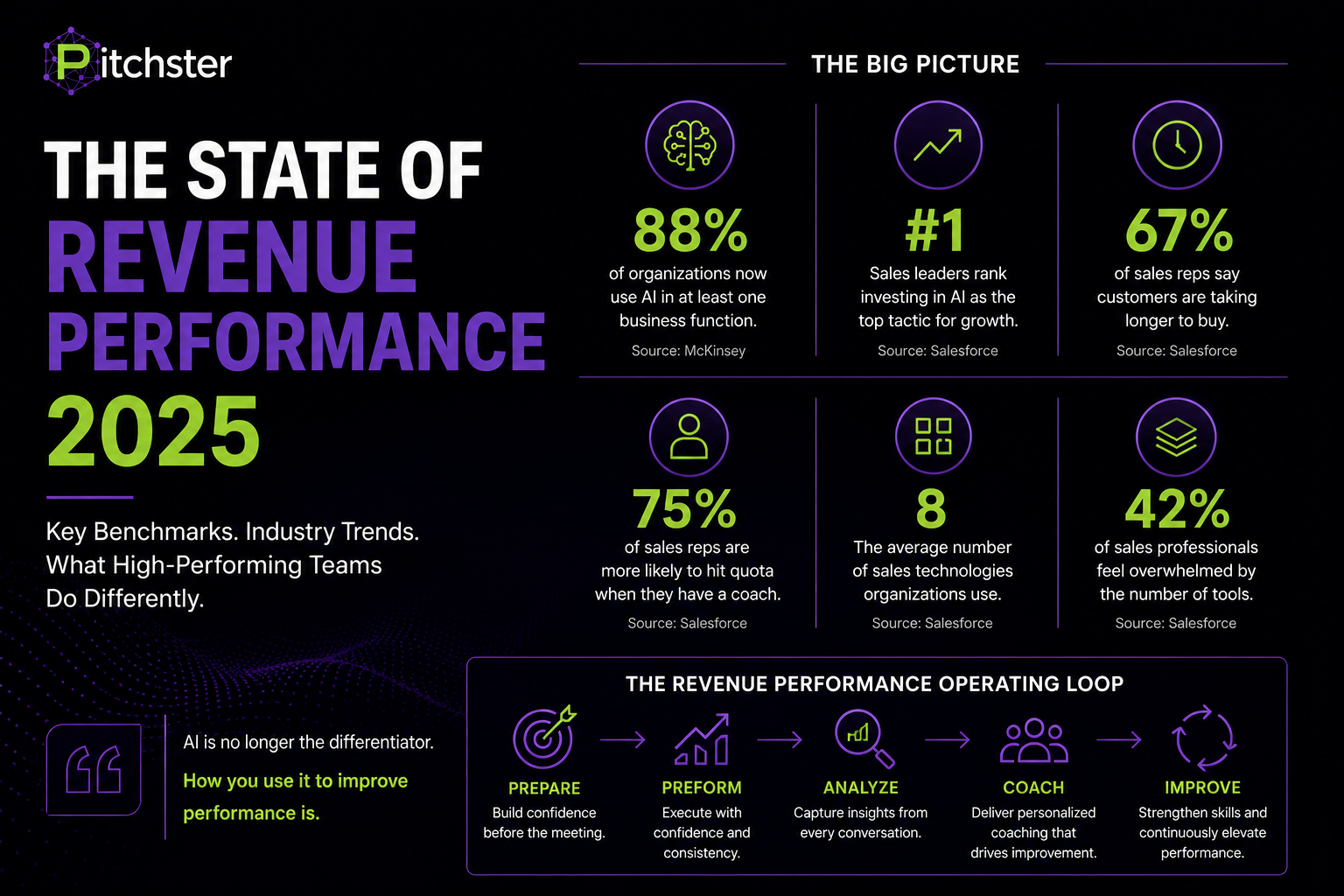
Pitchster was built around one belief: salespeople should prepare the same way elite athletes prepare — continuously, before every important performance. That philosophy powers the Revenue Performance Operating Loop: Prepare → Perform → Analyze → Coach → Improve. Every customer conversation strengthens the next one. Preparation creates confidence. Performance creates data. Analysis creates insight. Coaching changes behavior. Improvement compounds over time. AI role play becomes much more than training — it becomes the engine that powers continuous revenue performance.
Key takeaways
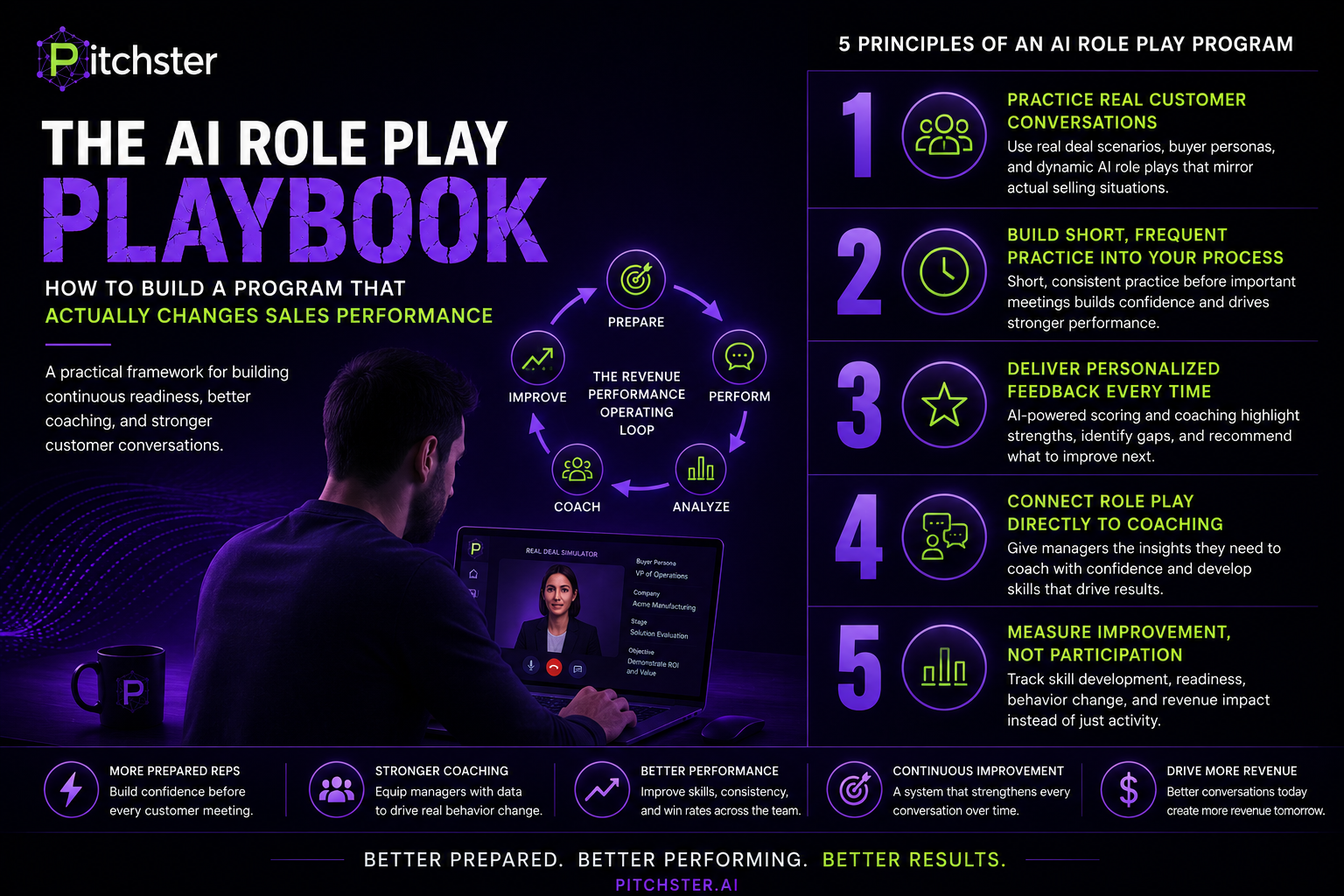
Successful AI role play programs are built around five principles: practice real customer conversations; make practice short and continuous; deliver personalized feedback; connect role play to coaching; and measure performance instead of participation. Organizations that build programs around these principles create sales teams that are more prepared, more confident, and better equipped to execute every customer conversation.