Great managers don't always create great coaching
Every sales leader believes coaching matters. Every frontline manager wants their team to improve. Yet many organizations continue to see the same problems: new reps take too long to ramp, top performers continue to outperform everyone else, coaching sessions feel repetitive, customer conversations don't noticeably improve, and managers spend more time reviewing deals than developing sellers. The problem usually isn't the manager — it's the coaching motion. Many coaching programs are reactive, inconsistent, and disconnected from the conversations they are meant to improve.
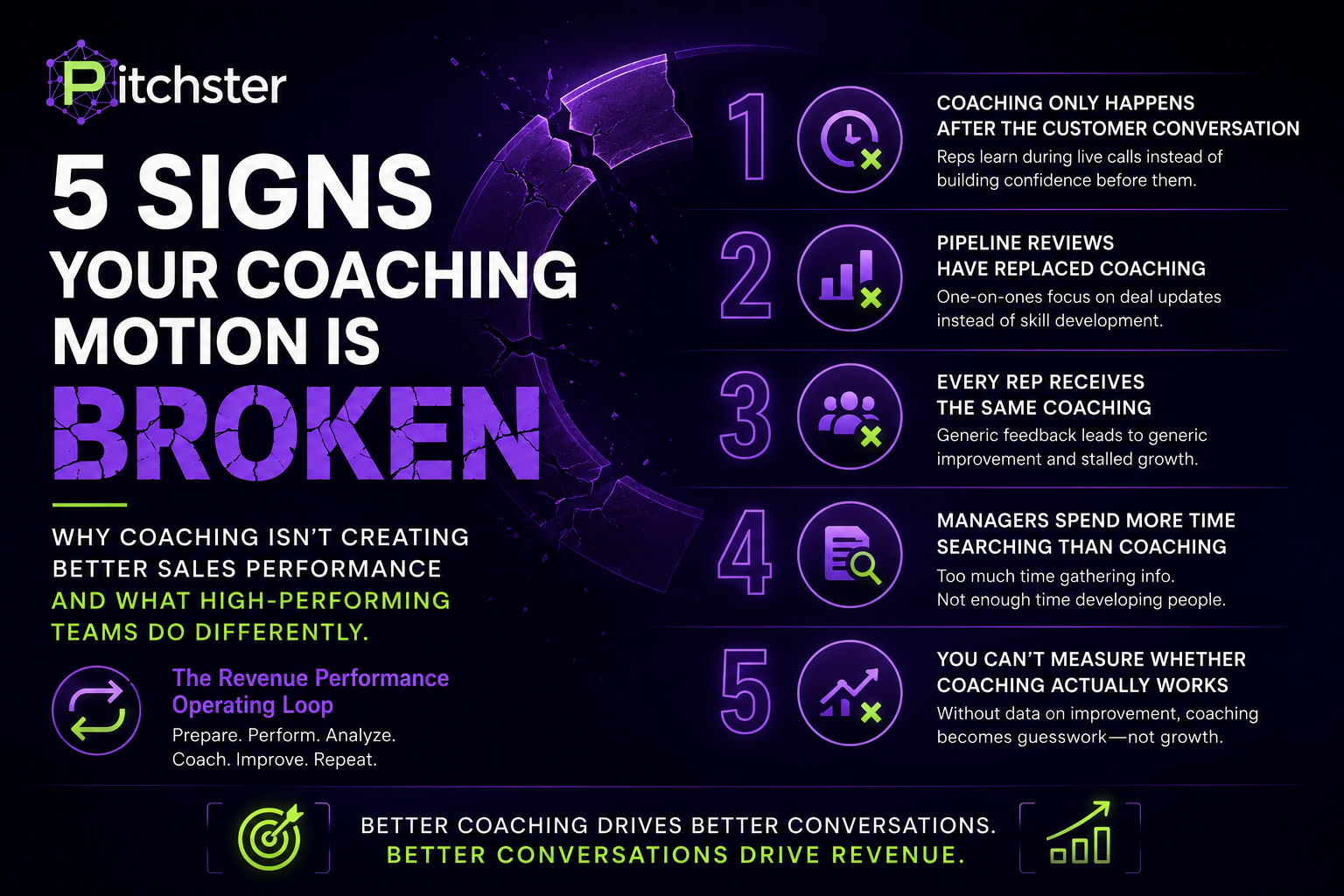
1. Coaching only happens after the customer conversation
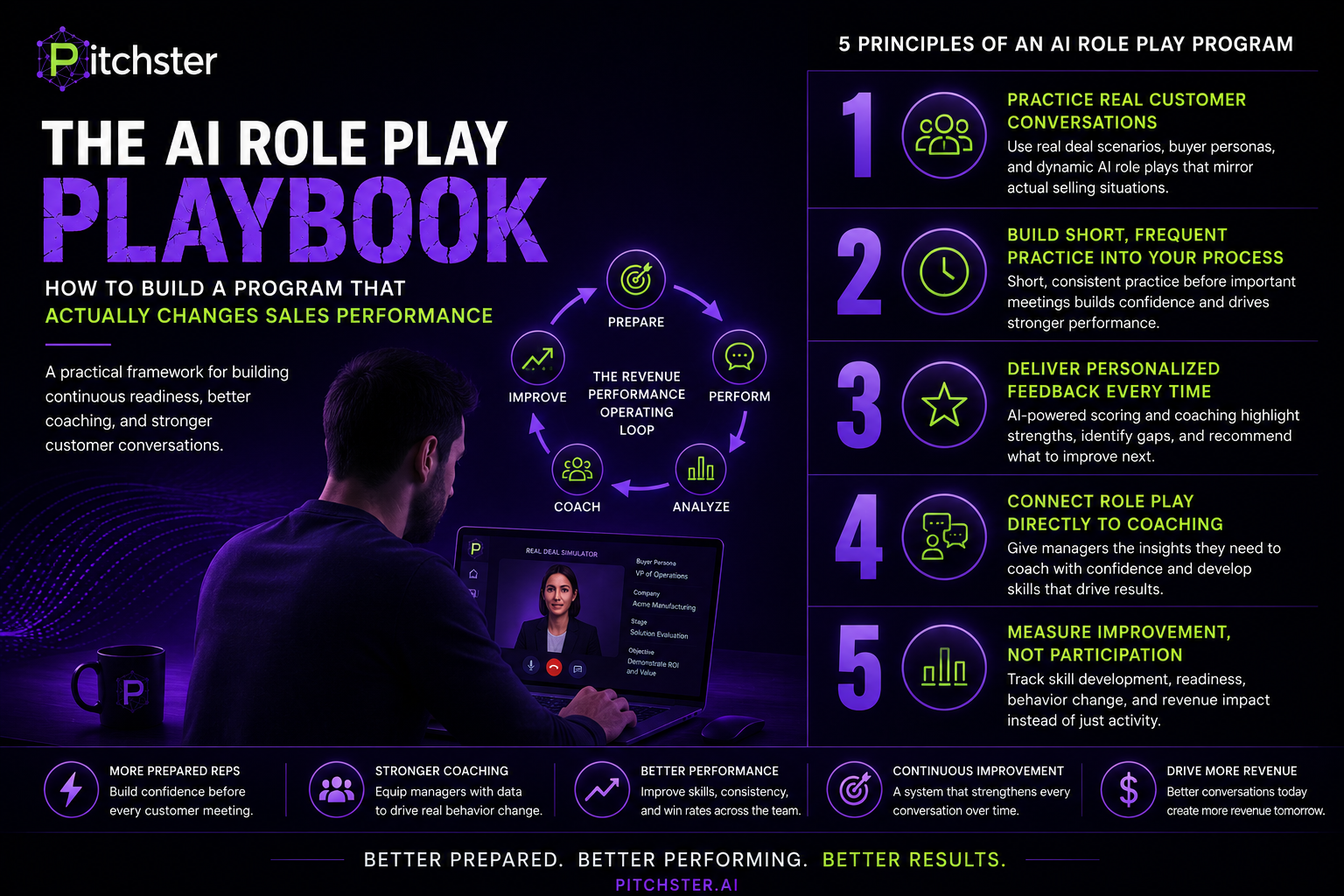
Most coaching begins after the meeting is already over. Managers review recordings, discuss missed opportunities, suggest better questions, and recommend different responses. By then, the opportunity has already moved forward and the customer has formed an opinion — the learning opportunity is valuable, but the selling opportunity is gone. Traditional coaching depends on reviewing historical conversations, so managers spend time explaining what should have happened instead of preparing reps for what will happen next. Your sales team learns during live customer meetings, and customers become the practice field. Every missed discovery question, weak objection response, and unclear value statement directly impacts revenue. The best organizations coach before the conversation — they practice, role play, and simulate real customer meetings to build confidence before revenue is on the line. Great coaching prepares people for tomorrow's conversation, not yesterday's.
2. Pipeline reviews have replaced coaching
Many one-on-ones sound like forecast meetings: 'Where is the deal? When will it close? Who's the decision maker? What's the next step?' Those are important business questions — they are not coaching questions. Managers are responsible for forecasting, reporting, inspections, hiring, internal meetings, and customer escalations, and coaching often gets squeezed into the same meeting. Eventually pipeline discussions consume the entire session. Your reps leave understanding their pipeline; they do not leave as better sellers. Pipeline inspection improves visibility; skill coaching improves performance. The two should never compete for time. High-performing organizations separate deal reviews from skill development, focusing coaching on behaviors like discovery, objection handling, executive conversations, business value, closing confidence, and communication. Better sellers produce better pipelines.
3. Every rep receives the same coaching
Every coaching session sounds familiar: 'Ask more questions. Slow down. Build urgency. Listen better.' None of that advice is wrong — it is simply too generic. Without objective performance data, managers rely on observations, and the easiest coaching becomes broad coaching. Everyone hears similar advice, even when everyone has different development needs. Generic coaching creates generic improvement. Top performers stop growing. New reps become overwhelmed. Managers struggle to prioritize development. Eventually coaching becomes background noise. High-performing organizations personalize coaching — every rep receives development based on measurable performance, and coaching becomes specific, objective, relevant, and actionable. The result is faster improvement and greater consistency.
4. Managers spend more time preparing to coach than coaching
Before coaching even begins, managers gather CRM notes, find recordings, read transcripts, review emails, search dashboards, and open multiple applications. Only then can the coaching conversation begin. Sales information lives everywhere — CRM, conversation intelligence, learning platforms, email, forecasting tools — so managers spend valuable time collecting information instead of developing people. The harder coaching becomes, the less coaching happens. Managers simply don't have enough hours, coaching becomes inconsistent, development slows, and performance stalls. High-performing organizations simplify coaching: performance insights are already organized, strengths are identified, improvement opportunities are obvious, and managers spend their time coaching instead of researching.
5. You cannot measure whether coaching actually works
You coach. You provide feedback. You hope performance improves. But you cannot prove it. Most organizations measure revenue, pipeline, activities, and forecast accuracy — very few measure skill improvement, readiness, behavior change, or coaching effectiveness. Without measurement, every coaching session becomes subjective, managers cannot identify what is improving, leadership cannot understand coaching ROI, and development becomes difficult to scale. High-performing organizations measure coaching the same way they measure every other business investment — they identify which skills improve, which behaviors change, and which coaching creates results, then repeat what works. Coaching becomes measurable instead of memorable.
The bigger picture
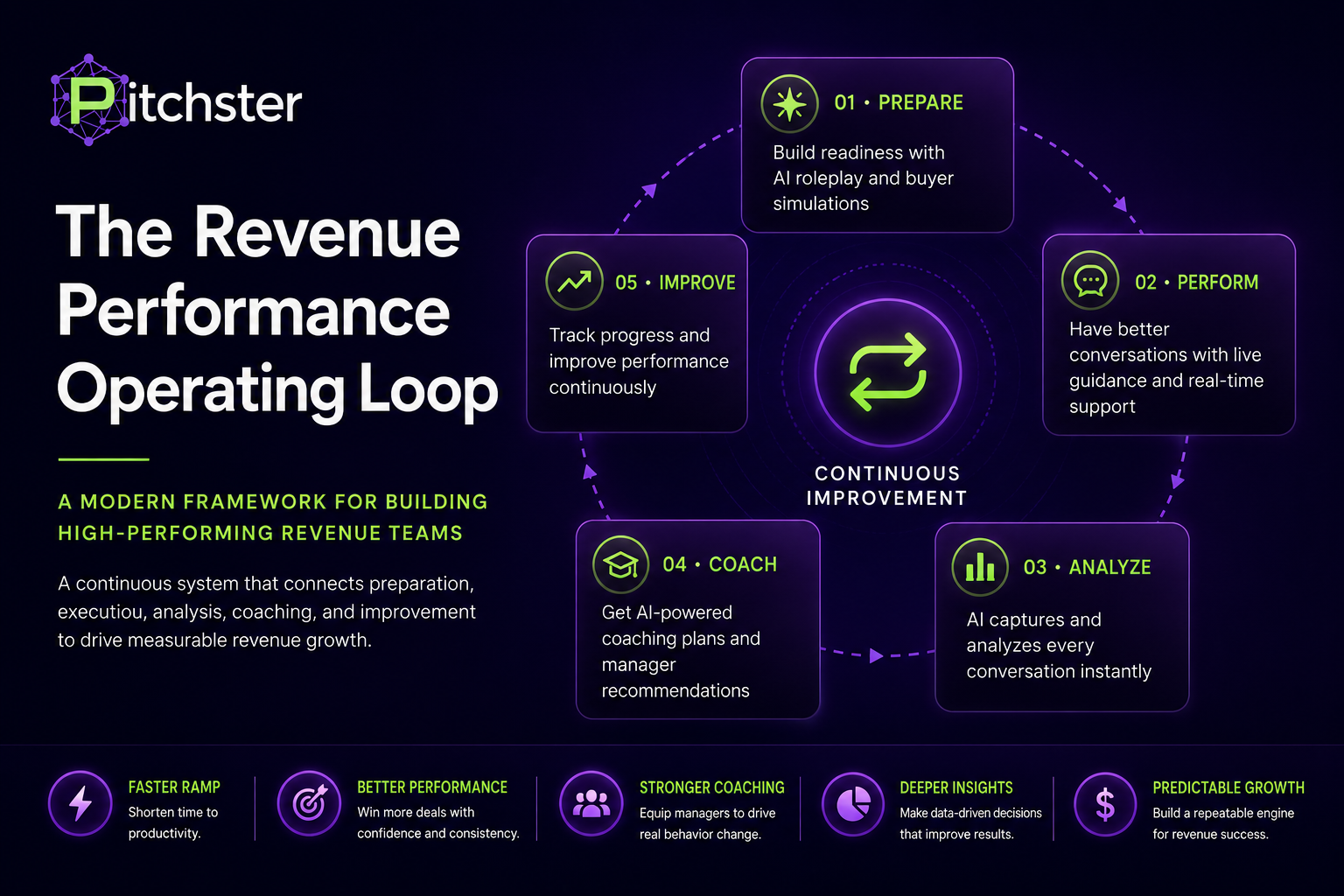
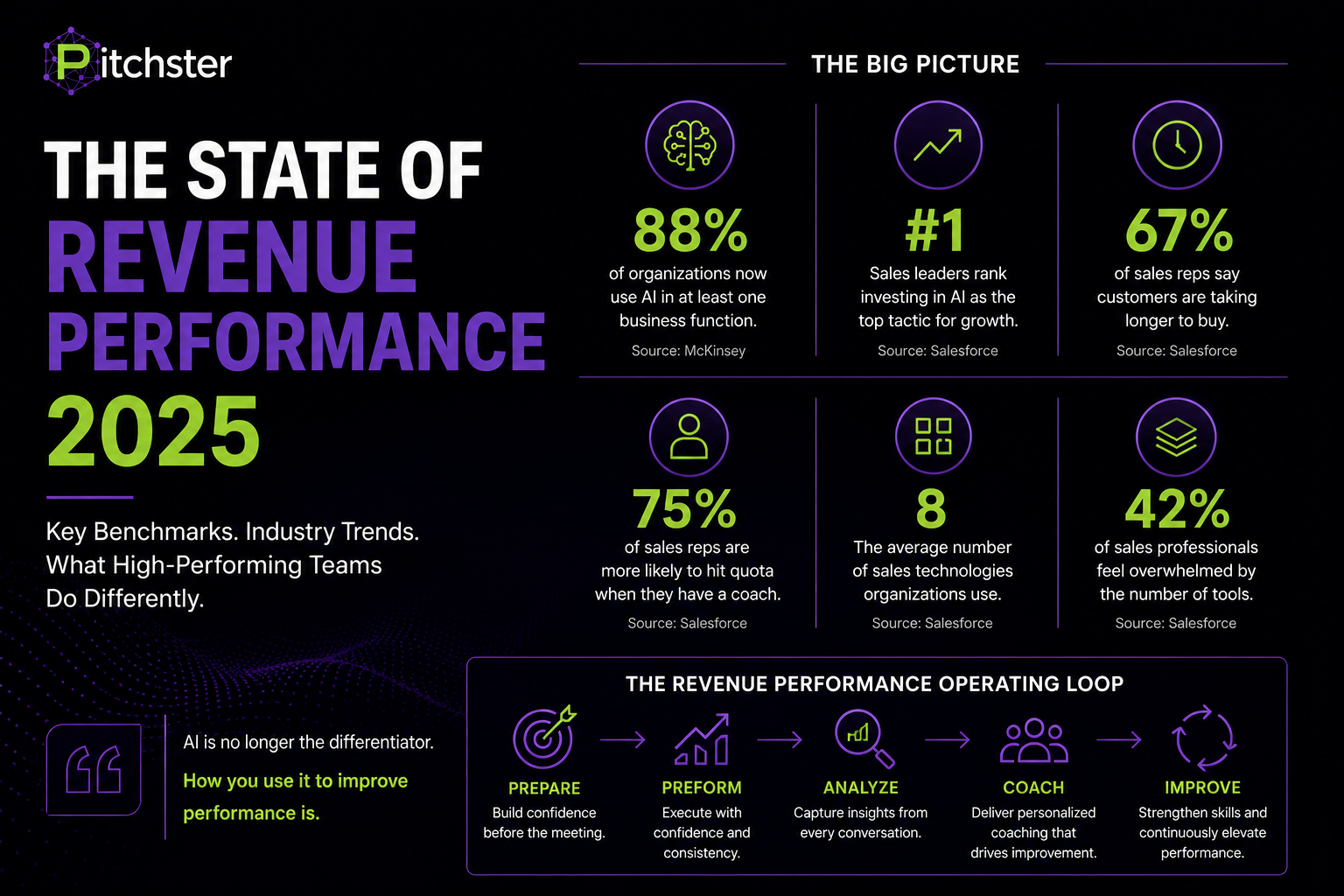
None of these problems exist because managers don't care. They exist because coaching has become disconnected from preparation, execution, and performance measurement. The best organizations don't simply review customer conversations — they build systems that improve every future conversation. The Revenue Performance Operating Loop cycles through five connected stages: Prepare → Perform → Analyze → Coach → Improve. Preparation builds confidence. Performance creates data. Analysis creates insight. Coaching changes behavior. Improvement compounds over time. The organizations that improve the fastest are rarely the ones with the most technology — they are the ones with the best operating system.
Ask yourself
Before your next coaching session, ask these five questions: Do my reps practice before important customer meetings? Are my one-on-ones focused on coaching or pipeline? Is every rep receiving personalized coaching? Do managers spend more time coaching than gathering information? Can I prove coaching is improving performance? If several of those answers are 'no,' your coaching motion is likely limiting your team's potential.