Executive summary
Sales organizations have never had more visibility into customer conversations. Today's technology can automatically record meetings, generate transcripts, summarize discussions, identify action items, and highlight important moments. For many organizations, that alone has been transformational — managers no longer rely on memory, leaders gain visibility, and coaching becomes more informed. But visibility alone doesn't improve sales performance. Understanding what happened during a customer conversation is only the beginning. The organizations creating the greatest competitive advantage don't stop with conversation intelligence — they turn every customer conversation into measurable performance insights, personalized coaching, and continuous improvement. That is the difference between understanding a meeting and improving the next one.
The evolution of revenue technology
Phase One — CRM: organizations gained visibility into pipeline, opportunities, and customer relationships. Leaders finally understood what was being sold. Phase Two — Conversation Intelligence: customer conversations became searchable, meetings could be reviewed, and managers gained visibility into how customer meetings unfolded. Phase Three — Revenue Performance: the next evolution isn't recording more conversations. It's transforming every conversation into measurable performance improvement. Instead of asking 'What happened?', modern revenue organizations ask: How well did the salesperson perform? What buying signals emerged? What risks were introduced? How likely is this opportunity to close? What should the salesperson improve before the next meeting? What should the manager coach? Is performance improving over time?
The Conversation Intelligence gap
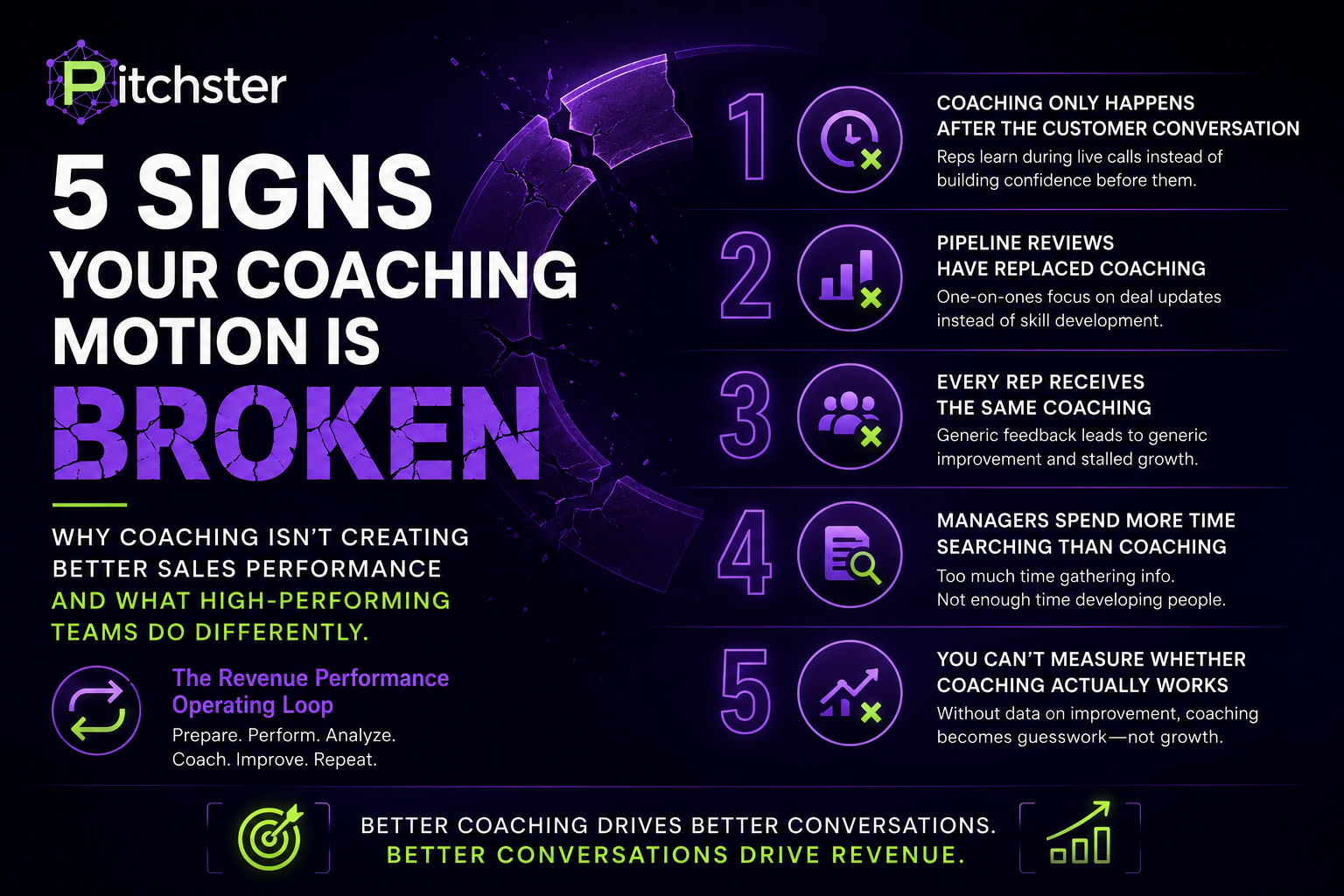
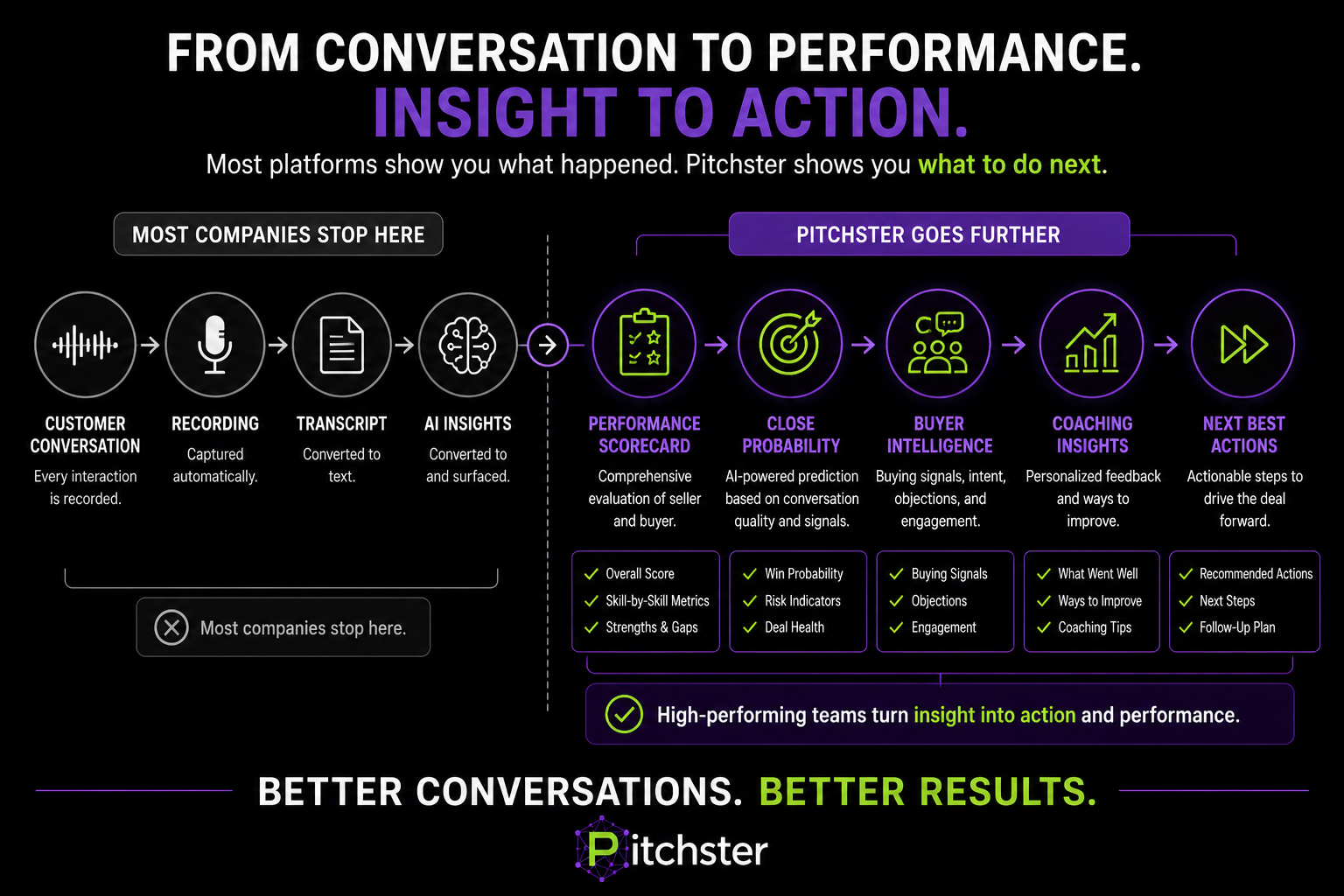
Most organizations follow a similar process: Customer Conversation → Meeting Recording → Transcript → AI Summary → Manager Review → Feedback → Next Customer Conversation. At first glance, the process seems complete — but one important step is missing: behavior change. The salesperson receives feedback, the next meeting arrives, and the same habits often return. The customer becomes the practice session, again. Recording meetings creates visibility. It does not automatically improve execution.
Recording conversations doesn't improve sales performance
Recording a customer meeting answers one important question: What happened? Revenue leaders need answers to much bigger questions — Did the salesperson execute effectively? How engaged was the buyer? Did the conversation move the opportunity forward? What signals suggest the deal is healthy? Where are the risks? What coaching should happen next? What should the salesperson practice before the next meeting? Is performance improving over time? A transcript cannot answer those questions. A meeting summary cannot answer those questions. Organizations need performance intelligence.
Every conversation becomes a Revenue Performance Scorecard
Instead of generating another transcript, Pitchster transforms every meeting into a complete performance evaluation. The result is a comprehensive scorecard that evaluates both the seller's execution and the buyer's engagement. Every customer conversation receives an overall performance score — measurable insight into how effectively the conversation was executed, tracked across every meeting, every representative, and every manager. Improvement becomes measurable.
Skill-by-skill performance evaluation
Great selling is built on behaviors. Pitchster evaluates the individual skills that influence revenue performance: opening and agenda setting, discovery effectiveness, question quality, active listening, business value communication, objection handling, executive presence, closing effectiveness, and next-step execution. Managers immediately understand where coaching should focus. Salespeople immediately understand what to improve. Every conversation becomes a learning opportunity.
Buyer Intelligence and Close Probability
Most platforms summarize what buyers said. Pitchster identifies what their responses actually mean — buying intent, engagement, business pain, budget discussions, decision-making indicators, urgency, competitive mentions, hesitation, positive signals, and risk indicators. Understanding the buyer is just as important as evaluating the seller. Pitchster also adds an AI-driven Close Probability using conversation quality, buyer engagement, selling behaviors, and conversation dynamics — strengthening forecasting with measurable conversation data rather than intuition.
Personalized coaching and Next Best Actions
Great coaching should never be generic. Instead of 'ask better questions' or 'build more urgency,' Pitchster identifies the specific behaviors that will create the greatest improvement before the next customer conversation — strengths, opportunities, and personalized coaching recommendations based on measurable performance. Every conversation ends with a strategy: schedule a technical validation, introduce an executive sponsor, strengthen business value before pricing, address competitive concerns, validate budget earlier, confirm decision criteria, or improve discovery before presenting a proposal.
The Revenue Performance Operating Loop
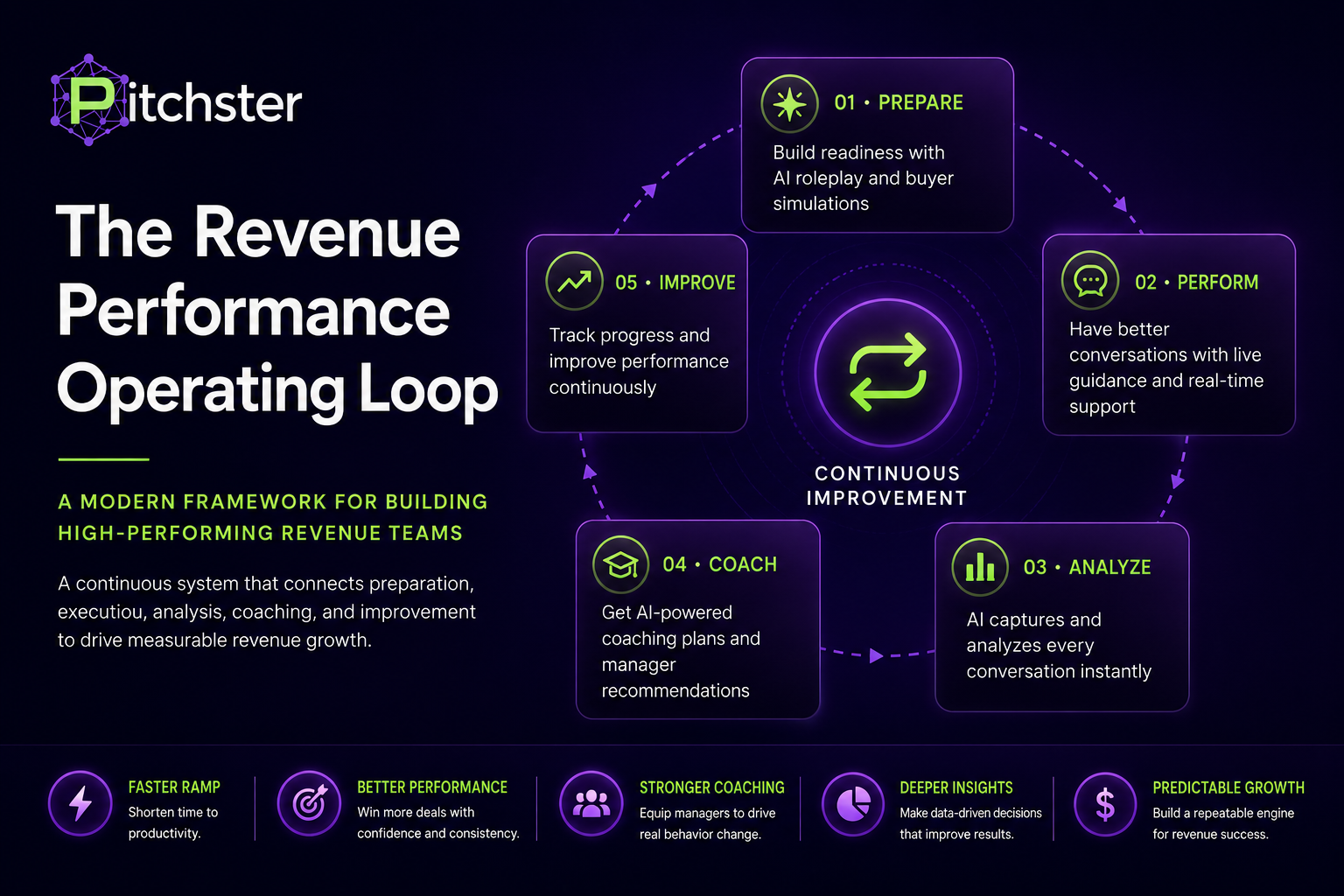
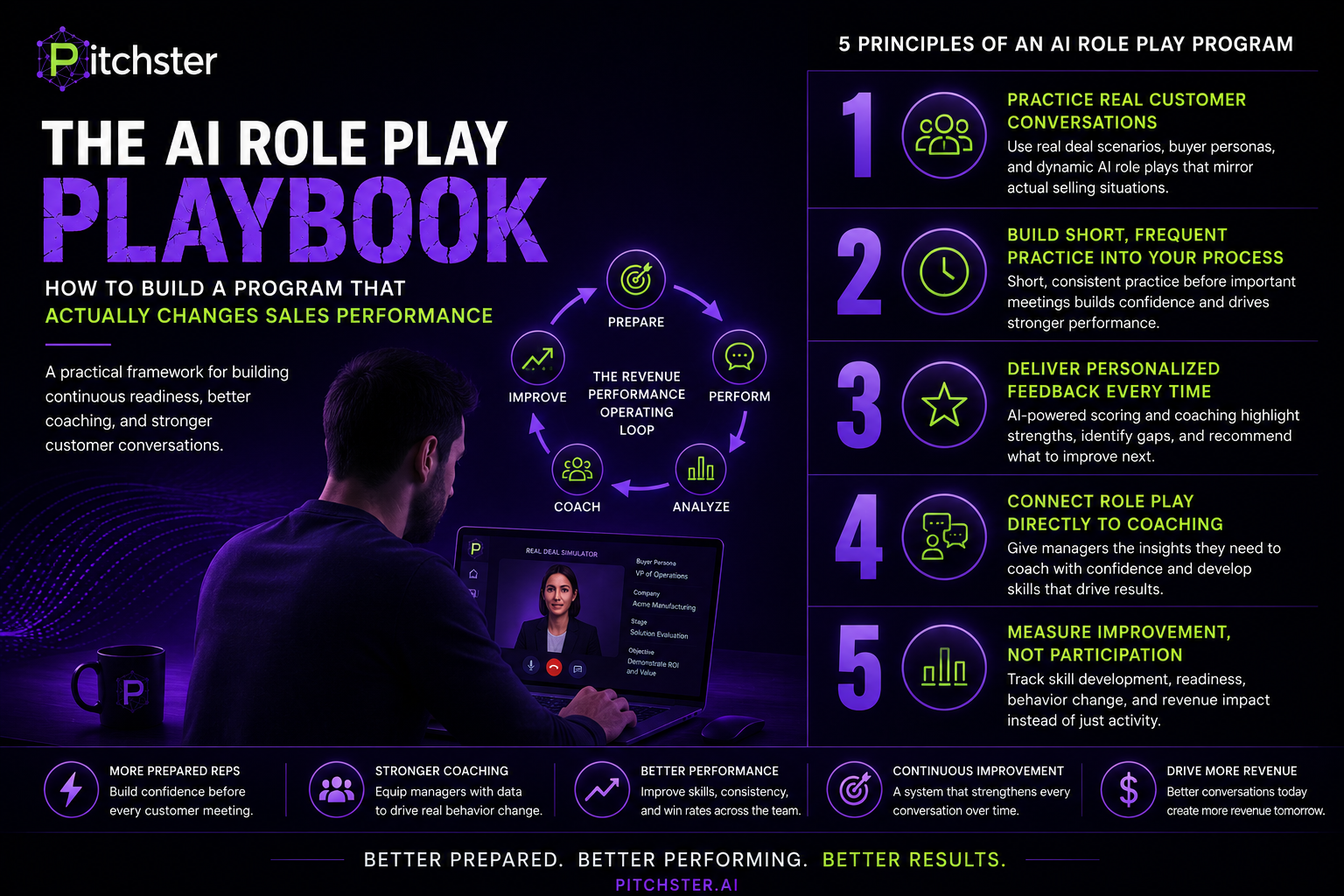
The highest-performing revenue organizations don't stop after the meeting. They continuously improve: Prepare (practice before customer conversations) → Perform (execute customer meetings with confidence) → Analyze (measure seller performance and buyer engagement) → Coach (deliver personalized coaching based on objective data) → Improve (track progress and strengthen future customer conversations) → Repeat. Every meeting becomes preparation for the next one.
Recording meetings is no longer the competitive advantage
Conversation Intelligence changed how organizations understand customer meetings. Revenue Performance changes how organizations improve them. The organizations that outperform over the next decade won't simply collect more meeting data — they will build systems that transform every customer conversation into better preparation, stronger coaching, smarter decisions, and continuous performance improvement. Knowing exactly how to improve the next conversation is the new advantage.